August 31, 2010

Concussions - Michigan High School Athletic Associates Sets New Policies and Procedures for Safety of Student Athletes

By Andrew Prine, Attorney and David Wolf, Attorney
Published by Child Injury Lawyer Network

sports%20football%20helmet%20white%20on%20grass.jpg

Vicksburg High School's head football coach, Tom Marchese believes that concussions are more serious than most people think, especially because concussions have long-term effects. Marchese may be on to something. New studies reveal that repeated concussions may cause permanent brain damage that eventually shows up with symptoms such as depression, chronic headaches, early-onset dementia, and/or adult-onset attention-deficit hyperactivity disorder.

Because of the seriousness of concussions and in attempt to protect it teens and younger child athletes, the Michigan High School Athletic Association (MHSAA) is making "one of the biggest rule changes ever." Starting this fall, athletes in any sport who show signs of a concussion during a game must be pulled from play and evaluated by a doctor. If a doctor is not immediately available or the doctor has concluded that the athlete did sustain a concussion, the athlete will have to sit out for the rest of the game. And, in either case, the student athlete will not be able to return to play until the athlete gets a doctor's written permission to resume play. If you would like to read more about this story see MHSAA sets stricter rules for athletes with concussions.

Teenagers and younger children are especially vulnerable physically. Therefore, concussions can have more dramatic effects upon these younger individuals than adults. It is a good start that MHSAA is taking these extra precautions and protecting student athletes.

August 30, 2010

Brain Injuries / Concussions May be Linked to ALS

By David Wolf, Attorney
Published by Child Injury Lawyer Network

football%20injuries.jpg

Scientists, who have conduct recent research, funded in part by the NFL, say they have found evidence that connects head injuries in athletes to a condition that mimics Lou Gehrig's disease.

Dr. Ann McKee said she found toxic the spinal chords of three athletes who had suffered head injuries. These athletes were also later diagnosed with Lou Gehrig's disease, or ALS. These same types of proteins were found in the brains of athletes with chronic traumatic encephalopathy (CTE).

McKee is a neurology professor at Boston University who has studied CTE in athletes. From her studies, McKee noticed an unusually high number of football players seemed to be affected by ALS. ALS attacks nerve cells in the spinal cord and brain and destroys the ability to move and speak.

The findings of McKee's research suggest that the motor neuron disease that affected the three studied athletes is similar to, but not exactly the same as, ALS. McKee and her colleagues are calling this "new disease" chronic traumatic encephalomyopathy (CTEM). It is suggested CTEM is "likely caused" by repetitive head trauma, especially those athletes are exposed to in contact sports. If you would like to read more on this topic please see New study suggests sports-related brain injuries may be linked to a disease similar to ALS.

July 30, 2010

Sports Injuries and Children - Tips to Keep Your Children Safe

By David Wolf, Attorney
Published by Child Injury Lawyer Network

sports%20equipment.jpg

Participating in youth sports is a great way for children to learn sportsmanship and the importance of exercise. However, it must be noted that dangers and risk of injury will always be present if your child does decide to participate in athletic sports.

Here are some precautionary measures to minimize injury risks to your children and better protect them:

1. Use the appropriate equipment for the sport.

Get the proper equipment and make sure any athletic gear fits appropriately. Proper equipment for each sport will usually bear a seal of approval by the respective organizations in charge of the sport. It is also important that you take good care of any sports equipment, this will ensure the equipment's effectiveness and increase the safety for your child.

2. Check the play area.
Inspect the area where your child intends on playing. You should check for cracks, protrusions, ruts, holes, pebbles/sticks/rocks or other obstacles that can cause you child to trip, fall or sustain another type of injury.

3. An adult should always supervise the sport.

A qualified adult should always supervise the sport being played. Make sure your child joins a team whose safety precautions coincide with your own. Make sure your child's coach is experienced and has a significant knowledge in first aid.

4. Make sure your kid is ready to play.

Your child should be matched with the sport he is physically capable of playing. Your child should also know the mechanics of the sport before he or she steps out onto the field ready to play. Warming-up is an important process in participating in sports, it decreases the chance of pulling a muscle or sustaining other injuries.

To read more on this topic see Safety Tips for Children in sports.

July 7, 2010

Parents Lack Important Knowledge and Experience Regarding Dangers of Concussions to Children

By Andrew Prine, Attorney David Wolf, Attorney
Published by Child Injury Lawyer Network

sports%20rugby%20team%20cartoon.jpg

The University of Michigan released a survey on Monday that revealed parents of school and youth athletes are highly unaware of the risks associated with sports-related concussions. However, these same parents support policies to minimize the dangers of concussions. Almost two-thirds of parents of athletes ages 12-17 worry their children will suffer from a concussion, but fewer than 1 in 10 have read or are knowledgeable about the topic. Most alarming, was that 50% or more parents said they knew other parents or coaches would place a child back into activity soon after suffering from a concussion.

The area of concussions has recently received high levels of scrutiny. There has been increasing evidence to suggest that repeated occurrences of concussions can result in significant risks later in one's life. Doctors say that concussions present more dangers to youth than to adults: youths are more likely to sustain concussions, have a longer recovery time, and suffer a greater chance of long-term brain damage if a second concussion occurs before the child has had adequate time to recover from the first.

Parents are put in a unique position when it comes to the area of concussions - "they need to recognize symptoms of concussions and work with coaches and doctors to ensure appropriate healing," said The Detroit News. Most concussions do not result in the loss of consciousness and visible symptoms may not occur until several hours after the incident. Also, young athletes who are concerned with playing time may lie to their coaches about their physical state of being. To read more about this topic see Parents need to be more informed about youth concussions.

Parents, coaches and even doctors need to educate themselves on concussions and appreciate that the injury is more than just loss of consciousness and vomiting. Parents should observe and listen to their children for signs that their child has sustain a concussion. Parents, coaches and doctors need to work together to ensure that children who sustain a concussion be evaluated before returning to any activity in which concussions can be associated.

July 2, 2010

3 Year Old Suffers Skull Fracture During Los Angeles Dodgers Batting Practice - Dangers of Baseball Games and Other Spectator Sporting Events

By Scott A. Marks, Attorney and David Wolf, Attorney
Published by Child Injury Lawyer Network

dodgers.jpg

A 3-year-old girl was struck by line drive ball at a Dodgers baseball games. The ball was hit by Dodgers player Russell Martin during batting practice at Dodger Stadium. The child sustained a skull fracture from the line drive and was rushed to the first-aid station by her father. According to the Associated Press, a Dodgers spokesperson said the girl was scheduled for surgery at Childrens Hospital Los Angeles, her injuries were not life threatening. Martin expressed sympathy and concern for the child and offered to pay for the medical expenses. To read more about this accident see 3-year-old struck by line drive ball at Dodger Stadium.

This is a tragic accident for the child, her family and the community. Injuries to children can happen during the most unexpected times. Safety precautions should always be taken in order to ensure a safe environment for children. Hopefully, the child will have a fast and complete recovery.

Liability is an interesting issue in this incident: Would the baseball team have any liability? Does purchasing a ticket constitute a waiver of liability regarding these types of injuries? If Martin did not offer to pay of the medical expenses, who would bear the cost of these expenses?

May 7, 2010

Playground Safety Advice from the Perspective of an 11 Year Old

By David Wolf, Attorney
Published by Child Injury Lawyer Network

Playground%20Monkey%20Bars%20and%20Play%20Injuries%20Personal%20Injuries.jpg

When addressing playground safety issues, I thought it would be interesting to post an article from a child's point of view. My 11 year old daughter provided me with the following article on Playground Safety:

On the playground, kids just want to have fun. Boys like to play sports like football and soccer. Girls like to play on the jungle gym. The boys' games can get pretty intense and the girls' jungle gym play can get competitive.

The teachers monitoring the playground cannot see every child playing at once. Let's just say your child is participating in a football game at school during recess. There is a fifth grader on the other team while your child is only in the second grade. Your child may have the chance to catch the ball BOOM! The big fifth grader tackles your child. After the incident, the teachers come running toward your child. They call you, the parent, and tell you about the terrible occurrence.

Thereafter, you arrive at the school and take your child to the doctor. You then find out that your child has a broken wrist.

To avoid this happening to your child or another child in the future, you should ask your child what they were doing with their friends. If some activity taking place does not sound safe or appropriate, you should speak to the teacher and, if necessary, the principal about the dangerous activity.

You should ask that the school to provide close supervision of your child and other children during recess and other times on the playground. A school and its staff should always do their best to keep kids safe.

April 24, 2010

Pediatrician States Playground Injuries - Preventable - Safety Tips for Parents, Day Care Providers, and Caregivers

By David Wolf, Attorney
Published by Child Injury Lawyer Network

playground%20tire%20swings%20empty.jpg

Playgrounds are a great place for children to play in a defined area with other children. Many playgrounds are safe and built to standards. With good supervision, these playgrounds are great for children. Other playgrounds, however, are not well maintained or built and contain a number of hidden dangers to children. Before a child is allowed to play on a playground, a parent, caregiver, day care provider, or teacher should inspect the equipment to make sure that it is safe and age appropriate for the children. If everything checks out, supervision is key to the safety of children. Children often times lack good safety awareness and judgment. As such, supervision is the best way to keep children safe on playgrounds. You can read other safety tips from a pediatrician who believes that many playground accidents and injuries are preventable at Playground Injuries Are Preventable.

Playground injuries are preventable

Posted By DR. SUSAN SURRY

Posted 22 hours ago

One of the sure signs of spring is children let loose in the playground. After a long winter, children are naturally thrilled to be out in the warm and sunny weather and ready for some fun. That's especially true for children aged five to nine who are active and imaginative, and learning new skills every day.

At this age, children like to push their physical boundaries and really enjoy jumping, climbing and balancing. They also think that they can do more than they are able to do and often take chances that can result in an injury.
Fall-related injuries are the number one reason for children aged five to nine years to be treated at hospital emergency departments. They are also the second leading cause of brain injuries for children. These injuries involve playground equipment more than any other type of fall.

While the actions of children can be unpredictable, injuries do not have to be. There are some simple ways that parents and caregivers can reduce the risk of injuries in this age group.

Start by making sure that the places children play are safe. Before children start to play, check the playground equipment for any damage, including loose bars, broken swing chains and nails or bolts that protrude. Make sure the hand rails are secure and free from splinters. Deep, soft surfaces such as sand, pea gravel and wood or rubber chips will cushion falls and prevent many injuries. Don't forget that injuries can also happen on backyard equipment, so do a safety check of your own home playground areas.

Young children can be injured on playgrounds designed for older children. If a child is too small to reach and use equipment alone, it is not designed for that age. Make sure that the equipment is the correct size and meets the physical abilities of your child.

Supervision of children decreases the chance of injury, so watch children closely. Stand next to all children when they are learning a new skill or climbing. Reduce a child's chance of choking on play equipment by avoiding clothing with drawstrings or scarves and removing bike helmets before playing on the equipment. Do not taking skipping ropes onto playground structures.

Teach children the playground safety rules. Children should know to wait and take their turn, to avoid pushing and to slide down feet first and walk up the steps or ladders, rather than running up the slide. Make sure you are consistent with the rules and that children follow them every time. Praise your children for playing safely and role model by following the safety rules yourself.

Playgrounds can be a great source of exercise, a time to meet other children and be involved in creative play. By playing safely together your family can make this season one of fond, and injury free, memories. For more information on preventing childhood injuries call Your Health Connection Monday to Friday 8:30 a.m. to 4:30 p.m. at 721- 7520 (1-877-721-7520) or check www.simcoemuskokahealth.org.

Dr. Susan Surry is an associate medical officer of health and a paediatrician.

April 17, 2010

Young Baseball Players Are Prone to Arm Injuries - Advice from Experts

By David Wolf, Attorney
Published by Child Injury Lawyer Network

Sports%20baseball%20on%20grey%20background.jpg

Spring brings baseball to many local ballparks. Children of all ages are out there playing America's favorite sport - baseball. As children get older, the sport becomes more competitive. The seriousness of the sport and competition level is often fueled by enthusiastic parents and coaches. While fun and competition can co-exist, parents and coaches should keep safety in mind when it comes to the health of young baseball players. The American Academy of Orthopedic Surgeons wants parents, coaches, and players to be aware of the problems and health issues that are prevalent among baseball players including throwing arm injuries. Simple stretching exercises and other precautions can be taken to help avoid or reduce the severity of these injuries. You can read more about this important issue at Young Baseball Players At Risk for Injuries. It is estimated that there are over 600,000 baseball related injuries that result in treatment or evaluation at a doctor's office or emergency room.

January 31, 2010

San Luis Obispo County California High Schools Institute Program to Better Deal with Student Athlete Concussions

By Scott A. Marks, Attorney and David Wolf, Attorney
Published by Child Injury Lawyer Network

medical%20health%20x%20ray%20of%20side%20of%20skull%20head.jpg

San Luis Obispo County, California high school and doctors are using a program to help doctors and coaches better manage student athletes with concussions. The program provides brain testing for student athletes BEFORE there is an injury or concussion. With this baseline testing in place, doctors are better able to determine the objective effects of a concussion after the injury takes place. A similar program is in effect for the National Football League.

This is a sensible approach by this County and its high schools. In medicine, baselines are important to establish the patient's condition before an injury or condition takes place. You can read more about this program at San Luis Obispo County California High Schools Institute Program to Better Deal with Student Athlete Concussions.

January 5, 2010

Five Year Old Boy Dies While Riding Motorcycle Christmas Present

By David Wolf, Attorney
Published by Child Injury Lawyer Network
ATV.jpg

A five year old boy from West Wales, United Kingdom, fell off a child’s motorcycle that he had been given as a Christmas present. He suffered serious head injuries from the fall and died after being taken to the local hospital. The child was reportedly playing with the gift in an enclosed playground when the motorcycle accident took place. His father had taken him to the park to practice, since it was closed to automobile traffic over the holiday. Unfortunately, because the enclosed area is usually used for driving practice, it has a concrete surface. According to a neighbor, the park was locked up, but the short fence would be easy for someone to hoist a bike over. Police are calling this a tragic accident. They would not say if the child was wearing a helmet at the time of the accident.

Motorized vehicles, such as motorcycles, all terrain vehicles (ATVs), and go-karts are very popular among kids. Unfortunately, if they are not used with appropriate care, supervision and safety precautions, these toys can turn deadly.

Find out more about this tragic motorcycle accident that took the life of a child at Boy, five, dies after falling off child's motorbike he was given as Christmas present.

January 3, 2010

Safety and Children's Sports - Focus on the Well Being of the Child

By David Wolf, Attorney
Published by Child Injury Lawyer Network

sports%20football%20close%20up%20view.jpg

In communities throughout the United States, children participate in organized sports. For the most part, sports involve exercise, team work, team building, and fun. There is a competitive component involved in children's sports. Unfortunately, many coaches and parents get too involved with the competitive nature of the sport. Practices are extended and the concept of winning takes a front seat or priority to everything else. It is important for coaches, parents, and league administrators to "keep the eye on the ball" and make sure both the physical and psychological well being of each child is considered when conducting practices and when competing in games. Remember that an 8 year old child is still an 8 year old child. An article posted at The Advertiser.Com provided good advice and perspective on this topic. See Play It Safe When It Comes to Kids and Sports.

December 5, 2009

Mankato, Minnesota School District Settles Kickball Personal Injury Lawsuit

By David Wolf, Attorney
Published by Child Injury Lawyer Network

sports%20kickball.jpg

Kickball is a popular elementary and sometimes middle school game that has been around for years. Typically, the game is played without incident or injury. Unfortunately, children are injured playing kickball and other schoolyard games. A school district can be held liable or responsible for the injuries if the game is not safely organized or if there is improper or inadequate supervision that leads to injury. It is the responsibility of the physical education coach, teacher, and or aide to make sure that playing fields are safe, free from hazards like above ground sprinklers, exposed rocks or fences, holes in the ground, or a grossly uneven playing surface. If a child suffers an injury as a result of negligence, a child can then pursue a case or claim against the school district. Of course, the laws of each State differ. Furthermore, each school district has its own rules and regulations that should be reviewed to determine compliance with the same.

In Mankato, Minnesota, a lawsuit was recently settled involving a fractured ankle. It appears from the story published at the My Fox 9 Web site that the field equipment, namely the kickball base which was merely a folder, was inadequate or unsafe for play. You can read more about this story at Mankato School District Settles Personal Injury Lawsuit.

November 21, 2009

Concussions and High School Sports - Role of the Coach, Trainer, Doctor, and Parent

By David Wolf, Attorney
Published by Child Injury Lawyer Network

sports%20football%20close%20up%20view.jpg

Concussions in high school sports are being scrutinized that recent studies have revealed a high incidence of brain injury and trauma in professional sports like the National Football League. When a high school athlete like a football player suffers a concussion, the best interest of the child / student should be paramount to all other concerns namely competition / winning a game. The Fort Wayne Journal Gazette recently posted a good article regarding concussion in high school sports - Concussions No Longer on the Sidelines. If you have a child active in sports, this would be a good article to read to see what approaches and recommendations are being made when a high school athlete suffers a concussion.

November 11, 2009

Soccer Bully or Soccer Competitor - Elizabeth Lambert? You Decide!

By David Wolf, Attorney
Published by Child Injury Lawyer Network

sports%20soccer%20ball%20on%20white%20background.jpg

On news stations, You Tube, and other media outlets, a video of Elizabeth Lambert has hit the airwaves in a big way. Elizabeth Lambert is a college soccer player for the New Mexico Lobos. In a game versus BYU, Elizabeth was filmed pushing, punching, and then dragging another player down by the other player's hair. The action is rough. Some say that Elizabeth Lambert is a soccer bully . . . others may refer to her as a tough competitor. The videos do show that women's soccer is a competitive tough sport. It should be noted that on some plays other plays are pushing, punching, and grabbing Elizabeth's shorts. While she may have been provoked at times, Elizabeth Lambert seemed to retaliate with greater force. You can make the call by watching the various videos online of Elizabeth's play. You can view one such video at Elizabeth Lambert - Soccer Player.

Parents of young children playing soccer certainly should not use these videos as examples of play, sportsmanship or technique. Serious personal injuries can result from such play and conduct.

October 24, 2009

Advice for Parents - Factors to Determine - When Should a Parent Take a Child to the Emergency Room (ER)?

By David Wolf, Attorney
Published by Child Injury Lawyer Network

hospital%20hallway.jpg

Parents can sometimes have a hard time determining when it is appropriate to take a child to the emergency room. CBS News medical correspondent and pediatrician Dr. Jennifer Ashton recently outlined some pointers for parents to recognize when an illness or injury is an emergency.

For Babies:
Look for changes in the baby’s day-to-day habits such as:

• Eating habits: Have they started eating a lot more or a lot less than normal?
• Frequency of bowel movements or urination: drastic changes that happen the same time as a change in eating habits can signal a serious problem.
• Amount of sleep: a baby that has stopped sleeping or sleeping much longer than usual can be a sign of serious illness.

Another signal of something serious is if your infant cries for more than three hours in a row. If the crying does not seem hysterical or inconsolable, a call to the doctor is in order. Otherwise a trip to the emergency room is warranted.

For Toddlers and Older Children:
If your child is injured in an accident, consider the “mechanism of injury.” For example, tripping over a rug will likely result in a much less serious injury than falling out of a window. This information will help you determine how serious their injury is likely to be.

Next, consider the ABC method:

• Airway: Kids can usually catch their breath quickly after an accident. If their breathing does not sound normal to you, consider a trip to the ER.
• Bleeding: If the wound does not show signs of clotting, if it seems very deep, or is more than ½ inch long you should visit the ER right away.
• Color: If your child’s color looks off, especially blue, yellow or grey, it can be a sign of internal injury and you should get them to an emergency room as soon as possible.

Another important indicator is your child’s mental status. If he babbles, is incoherent or delirious, this can be a sign of a high fever or meningitis.

If a parent has concerns about the health of a child, it is always advisable to be very cautious and diligent with medical care and follow up which may involve or require an ER visit.

October 10, 2009

Trampoline Accidents and Personal Injuries to Children - Duty to Maintain and Duty to Supervise

By David Wolf, Attorney
Published by Child Injury Lawyer Network

health%20medicine%20ankle%20x%20ray.jpg

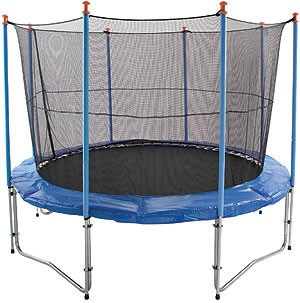
In the United States, United Kingdom (England), and many other places, children love to play on trampolines. Unfortunately, children are injured on injuries every day. Many injuries can be avoided with better safety precautions and supervision. Children, especially young children, lack safety awareness. This is especially true when playing on trampolines. Jumping on a trampoline can be quite empowering for a child. Children often want to jump higher and higher. Children then try tricks like flips and jumping in and around each other. During these stunts or just regular jumping, children are injured.

One safety precaution that is vital is a safety net. Every trampoline should have a properly installed safety net. Furthermore, all trampolines should be assembled per manufacturer instructions and placed on a flat secure area. Thereafter, trampolines should be inspected and maintained on a regular basis. There is no substitute for proper adult supervision as well. Trampolines that are properly maintained with safety nets are still hazards for children if there is no adult supervision. You can read more about trampolines Dangers of Trampolines: Child Injuries and Safety Measures.

October 9, 2009

Common Injuries Sustained by Children Playing Lacrosse

By Stephanie F. Brown, Attorney and David Wolf, Attorney
Published by Child Injury Lawyer Network

Sport%20Injuries%20Lacrossee%20child%20safety%20precautions.jpg

Lacrosse is a sport that increases with popularity each year. Due to the contact nature of the sport, there have been a number of reported injuries to children and young adults every year resulting from Lacrosse. David Marshall, M.D. recently posted an article about child injuries and Lacrosse. Dr. Marshall is the Medical Director of the Sports Medicine Program for Children's Healthcare of Atlanta. He also serves as Clinical Assistant Professor at Emory University School of Medicine in Atlanta Georgia. Dr. Marshall noted that approximately 300,000 children play Lacrosse and it is one of the fastest growing sports in the United States for boys and girls. The type of protective gear typically used by boys is different than that for girls. Many girl clubs and teams do not wear helmets or the protective gear when body checking is not permitted. Due to the potential contact and injuries that may be inadvertently caused by the Lacrosse stick and ball, some safety advocates may argue that it is better to have all available safety equipment in use even if the risks of injury is low when body checking is not permitted. Reported injuries from Lacrosse include abrasions, contusions, muscle and tendon strains, shin splints, fractures, and facial injuries. Parents should speak to coaches and club administrators about safety precautions in place and gear used for Lacrosse practices and games. You can read more about Dr. Marshall's article at Lacrosse and Common Injuries from the Game.

October 2, 2009

Traumatic Brain Injury to Children and Adults - Expert Medical Advice

By Benjamin A. Klopman, Attorney and David Wolf, Attorney
Published by Child Injury Lawyer Network

brainmap.jpg

Children (as well as adults) suffer injuries known as traumatic brain injury every day. These injuries can range from the very mild to injuries that can cause brain damage or death. Mild traumatic brain injuries are often referred to as concussions. Symptoms or complications following a head injury can be experienced immediately while some can be delayed. It is important for coaches, teachers, caregivers, parents, and medical providers to be aware of the signs and symptoms of a serious traumatic brain injury so that medical care can be obtained as soon as possible. Dr. Beth Slomine is a specialist at the Brain Injury Rehabilitation Program - Kennedy Krieger Institute based in Baltimore, Maryland. Dr. Slomine offered advice on traumatic brain injuries which included the following:

*Use safety precautions which can help reduce the incidence of brain injuries. Safety precautions include the use of seat belts, child safety restraints, helmets during bicycle and sports play when appropriate, and the use of playgrounds with shock absorbing surfaces.

*Following a head injury, watch out for the loss of consciousness, confusion, nausea, dizziness, weakness, lethargy, visual changed, and numbness. If any of these symptoms take place, get immediate medical attention and follow up.

*Keep a close eye on symptoms that can improve over time OR get worse over time.

*Rest is important after a head injury even after evaluation at an emergency room or after a doctor's visit.

*Avoid a return to at risk activities until the symptoms completely resolve.

Of course, it is difficult for a medical provider to provide advice that fits every situation. If you have concerns about a head injury to a child, get immediate medical attention. See Baltimore Sun Newspaper Article - Traumatic Brain Injuries Can Be Mild or Serious - Advice from an Expert.

Other valuable information and advice is located at the
Brain Injury Association of Maryland Web Site.

September 28, 2009

Lewiston-Porter (New York) High School Students Suspended for Hazing

By Steven Smith, Attorney and David Wolf, Attorney
Published by Child Injury Lawyer Network

sports%20soccer%20ball%20on%20white%20background.jpg

In New York, high school students from Lewiston Porter High School were suspended for being involved in a hazing incident involving raw meat. The incident involved players from the soccer team who threw raw meat and other food items at new players on the team. The ritual also involved putting eggs and flour on the new players. The suspension were for a few days.

Some may argue that this food incident was "harmless fun". Others will point out that it is a form of "hazing" since it involved demeaning acts. Any incident that involves the humiliation of a student should be banned and these acts should be punished. Furthermore, hazing incidents often times do lead to serious personal injuries and deaths. What if one of the new soccer players suffered an eye injury from the shell of an egg or by the flying meat? The bad acts should not be excused just because there were no physical injuries.

Children should be able to participate in high school sports without humiliation or hazing. Making the team should be based on school policy and procedure only rather than the additional requirement of student hazing. You can read about this article at Students Suspended Over Hazing Incident in New York.

September 24, 2009

Concussions and High School Sports - Dangers, Detection, and After Effects

By David Wolf, Attorney
Published by Child Injury Lawyer Network

brainmap.jpg

In Rhode Island and other states, high school athletes suffer head injuries / concussions every day. Some refer to concussions / brain injuries as the Invisible Injury. Since signs, symptoms, and after effects can be subtle and sometimes undetected by parents and medical providers, it is called the Invisible Injury. This makes it even more important for coaches, trainers, Emergency Rooms, doctors, and parents to use due diligence in examining the student athlete and conducting necessary medical testing and evaluation to help diagnose the injury and effects from the same. It is also important for parents and coaches to rest or sideline the athlete if it is in the child's best interest to rest the brain and keep the child from re injuring the same area of the head or even a different area of the head. A recent article provided interesting and important information by spot lighting the head injuries / concussions of a few student athletes in Rhode Island. You can read this story at Concussion: The Invisible Injury.