Child Injury Lawyer Blog


By Jay Foster, Attorney and David Wolf, Attorney
Published by Child Injury Lawyer Network
 Trial has been set for Larry Setzer of Horn Lake, Mississippi who has been charged with two counts of causing a death while driving a car under the influence (DUI) and causing an personal injuries and death. Car accidents by DUI can affect all of us, including our children. At the time of the car wreck Setzer was not drinking but was on a drug called Xanax. Anything that can impair motor skills and alertness including but not limited to illegal drugs, prescription drugs, alcohol, and sleep deprivation put innocent adults and children at risk on Mississippi highways and roads.
 Parents and caregivers of children who receive compensation or monetary settlements for personal injury cases should pay attention to the issue of qualification for benefits. Typically, a special needs child receives federal and state benefits based on disability as well as income requirements. If a child receives the proceeds from a personal injury settlement, these funds in a standard bank account could disqualify the child from some of the government benefits in place prior to the injury. Government benefits of this nature include Medicaid and Social Security Income benefits.
 While doing charitable work, delivering meals to the elderly in New York, 61 year old Ronald Marcink struck the rear of a school bus and died. Fortunately, the school bus had no students at the time and the bus driver was not injured. So it was a strange twist of fate that while helping the elderly, Mr. Marcink lost his own life, and yet by luck, his accident, which could have been catastrophic, injured no one else.
 Cobb County, Georgia police arrested a stepmother who provided alcohol to four teenagers at her home. One of the teenagers was killed later that night in an automobile accident when the car he was driving crossed the center line and collided with another car. Garrett Reed, a junior at Harrison High School, was killed in the accident in which Cobb County police believe alcohol and speed were contributing causes.
 A Montgomery County, Maryland high school student (Thiago Andrade, age 17) died in an accident involving a 2003 Toyota Camry that split in half. The car was driven by Johvanny Garmendez, age 17, of Silver Spring, Maryland. The vehicle struck a tree after Johvanny drove off of Veirs Mill Road. The vehicle then went down a grassy hill, hit a tree, and then broke into two sections. Both teenagers were wearing seatbelts.
 Although statistics reflect that the percentage of uninsured motorists has decreased in Wisconsin and nationally in the past few years, there is a concern that recent economic problems may result in a rise in the number of uninsured motorists. In a recent study conducted and released by the Insurance Research Council (IRC), it estimated that nationally in 2007 approximately 13.8 % of motorists were uninsured. The study provided data, by state, as to the percentage of uninsured motorists, with the highest being New Mexico and Mississippi, at 29% and 28%, respectively, and the lowest being Massachusetts and Maine, at 1% and 4%, respectively. Wisconsin’s estimated percentage of uninsured motorists in 2007 was 15%, ranking it in the highest third of uninsured motorists in the nation. The study found a strong correlation between the percent of uninsured motorists and the unemployment rate. To view the News Release, dated January 21, 2009, by the IRC, go to
 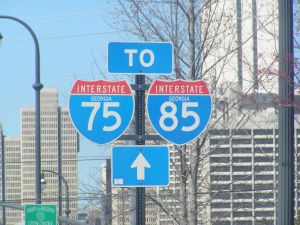 Although it has been in effect since July 1, 2004, many parents are still unaware or unsure of what the requirements are of Georgia’s child passenger safety law, O.C.G.A. §40-8-76.1. The law applies to adults and children. With regard to children, however, the law imposes more stringent requirements.
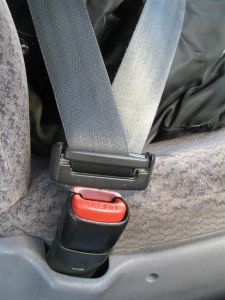 In a bill introduced in the Georgia State Senate on January 15, 2009, the failure to wear a seatbelt would be considered as evidence against a plaintiff in a lawsuit arising out of an automobile accident. Under this bill, the failure of a plaintiff to wear a seatbelt in violation of Georgia’s seat belt law could be considered as evidence of the plaintiff’s own negligence or contributory negligence. Such a bill will give the at fault driver a chance to point the finger back at the plaintiff, saying to the plaintiff “Yes, I might be at fault but so were you in not wearing a seat belt.” In Georgia, the injured victim could be an innocent child passenger who failed to fasten his or her seatbelt and suffered injuries in a car accident through no fault of his or her own.