 Child Injury Lawyer Blog


By Kevin Leach, Attorney and David Wolf, Attorney
Published by Child Injury Lawyer Network

A bill (law) has been proposed for a modification to Virginia’s current law regarding children passengers on motorcycles or other two-wheel transportation devices. The proposed law would make it illegal for any child under 8-years-old to ride on a motorcycle driver on Virginia roadways. Virginia’s current child restraint law: Children riding in a motor vehicle will be restrained. However, some people do not consider a motorcycle or scooter a motor vehicle. Advocates of the bill say children under the age of 8 should be restrained whether in an automobile or riding a motorcycle, arguing that most children in that age range lack the strength and skills to safely hold on. Opponents of the bill say this law would drastically interfere with parental rights. The recent increase in Virginia gas prices has sparked a drive in motorcycle and scooter sales. Opponents, therefore, argue that with the new law many children will end up having to walk if the law is passed and enforced. For more on this topic please see Virginia proposes new law that will ban child passengers on motorcycles.

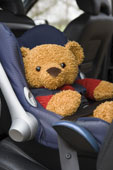 The California Highway Patrol (CHP), Department of Motor Vehicles (DMV) and Child Doula Services have come together to conduct monthly inspections for child passenger safety. According to CHP Officer Paul Dahlen the goal is to educate not enforce. Hopefully educating those drivers with child passengers will reduce child personal injury and child death statewide. Properly installing child safety seats is a state-wide issue. Dahlen stated that 90 percent of inspected car seats are improperly installed. Proper installation of child safety seats is important because it can reduce the chance of a child being ejected from the vehicle during a crash, as well as decrease a child’s chance of sustaining severe personal injuries or being killed. Under the current California law, children must be secured in an appropriate child passenger restraint (either car or booster seat) until the child is at least 6-years-old or weighs 60 pounds or more. The current fine for violating this law can be significant, 435 plus add points to an individual’s driving records. For more on this topic please see
  In Lynn, Massachusetts, a personal injury lawsuit was filed against the owner and operators of a home-day care provider after their son fell from the home’s second story porch and crash head first in the cement. John Yasi, attorney for the Lynn family, said the young boy, Kelvin Sholola, sustained severe personal injuries including a brain injury and fractured bone in his forehead. Yasi also stated that Kelvin may suffer lifelong developmental issues because of the incident due to Kelvin’s age and the location of his personal injuries. The lawsuit against the Massachusetts day care operator, Lucilia Guerrero, who was licensed to operate the facility, left Kelvin, who was 21-months-old at the time, and his two other siblings unattended. Being left unattended, Kelvin fell from the second-floor porch of the home because of “rotted wooden slats and insufficient protective barricading.” The kids were apparently prohibited from being on the porch by the home’s state license. Therefore, the family is not only alleging the children were improperly on the porch, but also that they were unsupervised by Guerrero. Kelvin was “comatose for several days” after the incident. However, he is presently out of the hospital although his speech, amongst other things, have appeared to slow down in development. Guerrero eventually surrendered her license after the incident. For more on this story see
  In Morganza, Louisiana, a family lost a son who was the unfortunate victim of a dog mauling by the neighbor’s three Boxer breed dogs. The small town / village of just over 600 people mourned this little boy’s death. In the aftermath of his death, the family along with a blogger (Holly Lemoine) launched a campaign and website called
 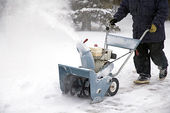 During these chilly months, families need to be cautious while operating snow blowers. According to the Consumer Product Safety Commission (CPSC), in a recent year almost 600 finger amputations were caused by the improper use of snow blowers or snow throwers. The majority of these severe personal injuries occur when operators attempt to clear snow from the discharge chute or debris from the augers with their hands. Simple prevention include fully understanding the equipment and never touching the machine while it is in operation. Yes, these machines do make our lives easier but they are still machine with fast moving parts that can inflict serious person injuries to homeowners, parents, and children. In fact, the CSPC reports that each year approximately 5,740 hospital emergency rooms-related injuries are associated with snow blowers. The agency has also reported 19 deaths associated with snow blowers since 1992, which have been caused by people getting caught in the machine and carbon monoxide poisoning. Therefore, make sure you fully understand the equipment you are working with. Parents should also inform and teach their children how to appropriately use these machines.

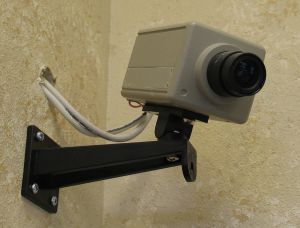 In Las Vegas, Nevada, CBS News Now 8 covered the important topic of video surveillance in day care centers and other safety measures in place at Las Vegas day care centers. The report was in response to an arrest of a day care worker on abuse charges. While the abuse charges / allegations from incidents did not take place at a day care center or to day care center students, the fact that a day care worker was arrested for child abuse related charges is quite unsettling. What assurance does a parent have that a child is safe in a day care center? What precautions are taken to protect a child in a day care center? Are criminal background checks completed for all employees of the day care center? While criminal background checks are required by Nevada State law, a person, who does not have a criminal record, will be permitted to work at a day care centers. Thousands if not millions of child predators in the United States do not have a criminal record because they have never been caught.