 Child Injury Lawyer Blog



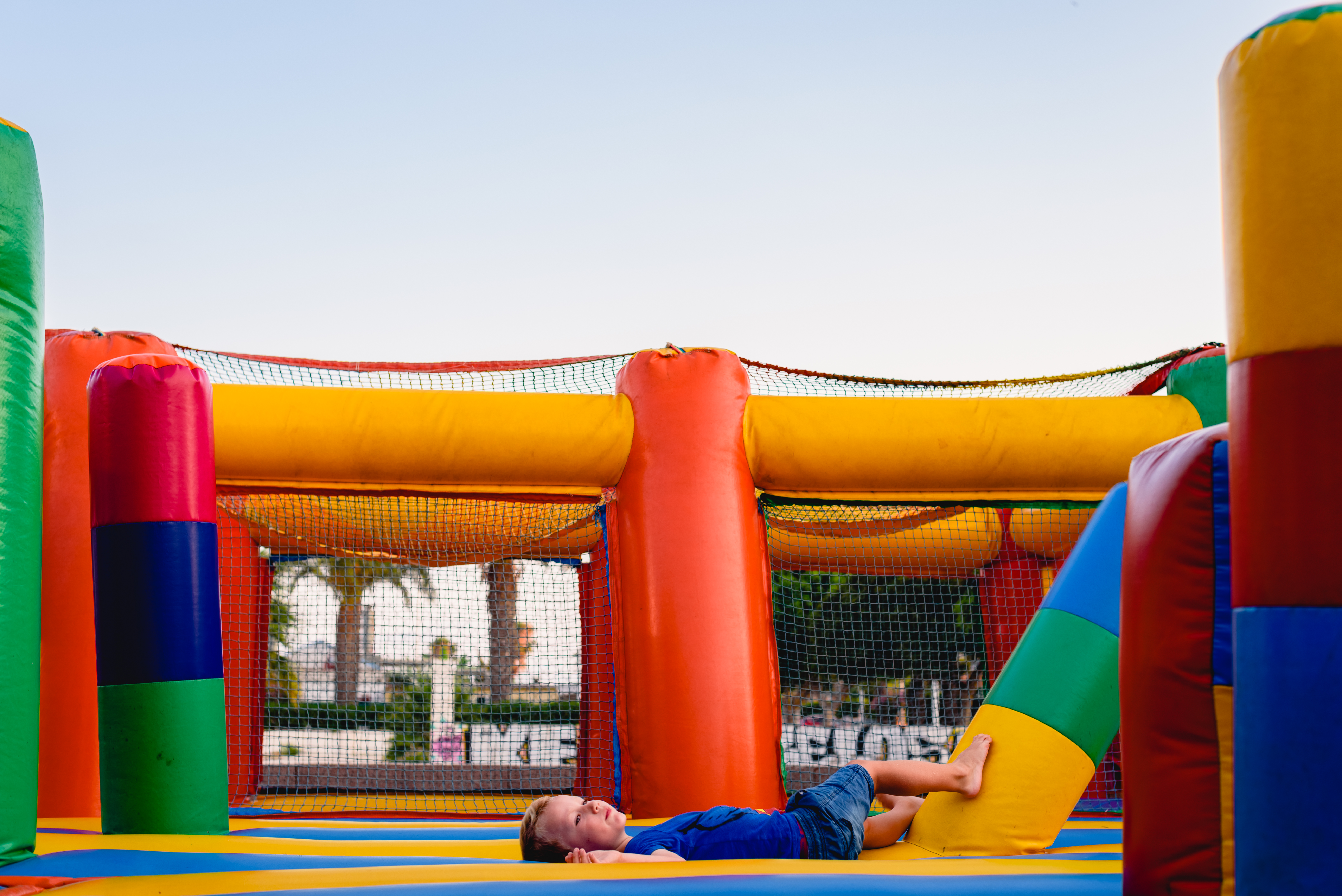
Summer is filed with fun and play for children. For some, the bounce house is a great place for children to exercise, move around, and socialize with friends. The bounce house can also the scene of a serious injury especially for small children and toddlers. Just because a bounce house is padded and filled with air does not mean that a bounce house is a safe place.
Bounce house play can be a fun time for your children this summer, but repeatedly jumping up and coming down in various ways come with inherent risks. While it is difficult to completely ensure your child’s safety within a bounce house without being over-protective, measures can be taken to minimize safety risks. When buying or renting a bounce house to use for a children’s event check to make sure that the selected bounce house is equipped with safety nets and is set up as instructed by the manufacturer. This includes remembering to securely fashion the bounce house to the ground in order to account for sudden gusts of wind that may topple over the house. While most injuries suffered within bounce houses are not severe, if wind knocks the house airborne with children inside of it, the chance of serious injury skyrockets. Though it may be hard to regulate, keeping the number of children within the bounce house below its maximum capacity further minimizes risk of injury to your child.
Dr. David Foley, medical director of an urgent care centers, states that summer is the season that sees the most “slip, trip, or fall’ injuries. He goes on to state that risk of injury is inevitable in bounce houses due to promoting jumping and falling in different ways. The risk is even greater in these cases as the bounce houses allow for falls from even greater heights, generating more momentum and force as they fall back to ground which can lead to more serious injury. When setting up a bounce house outdoors, check weather reports for rain as a slippery bounce house can be a recipe for disaster, adding more risk to an already dangerous activity. According to doctor Foley the most common injuries that occur within bounce houses are to the limbs. These types of injuries include but are not limited to, twisted ankles, fractured elbows, and in the most serious of cases, head trauma. For events in which parents plan to use a bounce house, assigning supervisors to keep watch over what’s happening within the bounce house can prevent injuries that are results of negligence. See Bounce House Play – Keeping Children Safe.





 In the United States, we have a constitutional right to bear arms. A right that is very important to gun owners and people who feel strongly about the Second Amendment. Even though there is a right to gun ownership, it does not mean that the handling, storage, operation, and maintenance of a gun is without responsibility. A gun owner should take reasonable efforts to secure and safeguard guns in his possession. This is especially important in homes, day care centers, and other areas where children live or children visit. It is important for a gun owner to be trained and obtained knowledge as to the proper maintenance in to avoid any malfunctions during use and even to avoid any malfunctions or accidental shootings during the cleaning and maintenance of the gun. Unfortunately, children are injured and even die every year due to an accidental shooting and/or the negligent maintenance, ownership, or storage of a gun. When there is a shooting, there can be a criminal case prosecution if local law enforcement and the state or district attorney determine that the acts were criminal in nature under the applicable laws, statutes, or ordinances. An incident is certainly committed and can be prosecuted if it was committed with intent. An incident can also be deemed criminal in nature if the condut of the shooter and / or the gun owner was reckless in nature. Separate and apart from the potential criminal case, there may be a civil case to pursue against the gun owner, shooter, and / or property owner where the incident took place. A civil case, unlike a criminal case, seeks compensation for not only medical bills but also for pain, suffering, and loss of enjoyment of life. Typically, there are four elements to a civil cause of action involving allegations of negligence or carelessness as follows: